
A well-designed workout room is far more than a collection of weights, machines, and flooring. One of the most overlooked elements is the home gym mirror setup, yet it has a direct influence on workout quality, exercise safety, motivation, posture correction, and even the perceived size of your training space. Many people purchase expensive fitness equipment while overlooking the simple addition of properly positioned mirrors, only to discover later that poor visibility limits exercise form, makes strength progression difficult to monitor, and creates a less engaging training environment.
Professional fitness centers invest heavily in mirror planning because mirrors serve several essential purposes simultaneously. They provide immediate visual feedback during movement, allowing athletes to identify posture errors before they become habits. Mirrors also increase spatial awareness, making exercises feel more controlled and reducing the risk of accidental collisions with equipment. Beyond biomechanics, mirrors create the psychological impression of openness, making even compact home gyms appear brighter, cleaner, and significantly larger.
However, installing mirrors is not as simple as attaching glass to a wall. The wrong mirror height can distort movement patterns, poor lighting can create misleading shadows, incorrect positioning may introduce dangerous glare, and inadequate mounting methods can compromise safety. Every decision—from selecting mirror thickness to choosing tempered glass, determining wall coverage, and calculating viewing angles—affects the overall effectiveness of your gym.
This comprehensive home gym mirror setup guide explores every stage of the planning process using professional design principles commonly applied in commercial fitness facilities. Whether you are building a compact garage gym, converting a spare bedroom into a functional workout studio, or designing a premium training space from scratch, the principles discussed here will help you maximize both functionality and aesthetics.
Throughout this guide, you’ll learn how to select the best mirrors for home gym environments, determine ideal dimensions, plan wall layouts, install mirrors safely, optimize lighting, avoid common installation mistakes, maintain long-term durability, and apply proven design strategies that improve every workout session. By the end, you’ll understand not only how to install mirrors but also why certain configurations consistently outperform others in real-world training environments.
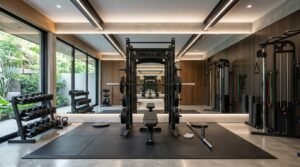
Why a Home Gym Mirror Setup Matters
A thoughtfully designed home gym mirror setup is much more than an aesthetic upgrade. Mirrors function as a practical training tool that improves exercise execution, enhances safety, and creates a more motivating workout environment. Fitness professionals frequently recommend incorporating mirrors because visual feedback complements proprioception, enabling users to recognize movement errors immediately rather than relying solely on body awareness. This real-time correction helps reinforce proper mechanics and reduces the likelihood of developing poor exercise habits that could eventually lead to discomfort or injury.
Another major advantage is spatial perception. Home gyms are often located in garages, spare bedrooms, basements, or converted living spaces where square footage is limited. Strategically positioned mirrors reflect light and surrounding surfaces, creating an illusion of greater depth and openness. This visual expansion makes the room feel less confined, encouraging a more comfortable and enjoyable training experience. In compact environments, even a single large mirror can dramatically change how the space is perceived.
Mirrors also support psychological motivation. Watching visible progress over weeks and months reinforces consistency by allowing users to observe changes in posture, muscle definition, and lifting technique. This immediate feedback can increase confidence and strengthen commitment to long-term fitness goals. Unlike digital metrics that focus solely on numbers, mirrors provide qualitative insight into movement quality and physical transformation.
From a design standpoint, mirrors establish visual balance within a workout room. They complement rubber flooring, strength racks, cardio machines, and free-weight areas while reflecting natural or artificial lighting to brighten the space. A clean, professionally installed mirror system contributes to a premium gym atmosphere that encourages more frequent use and better maintenance habits.
Planning Your Home Gym Mirror Setup Before Installation
Evaluate Your Available Space
Every successful home gym mirror setup begins with a comprehensive assessment of the available room. Rather than purchasing mirrors immediately, start by measuring wall dimensions, ceiling height, equipment footprint, window placement, electrical outlets, and walking clearance. These measurements form the foundation of an efficient layout that accommodates both current equipment and future upgrades.
Traffic flow is another critical consideration. Users should be able to move comfortably between exercise stations without mirrors interfering with equipment placement or creating distracting reflections. For example, a squat rack positioned too close to a mirrored wall may limit barbell clearance, while mirrors installed behind cable machines may be partially obstructed during workouts. Planning circulation pathways before installation helps avoid costly repositioning later.
Ceiling height also influences mirror selection. Rooms with standard residential ceilings often benefit from taller mirror panels that visually extend the vertical dimension of the space. In contrast, low ceilings may require wider mirror configurations to create a sense of openness without emphasizing height limitations. Understanding these spatial dynamics allows homeowners to make informed decisions that improve both functionality and appearance.
Finally, consider future flexibility. Many home gyms evolve over time as users acquire additional equipment or change training styles. Leaving adequate wall space for expansion ensures that the mirror layout remains practical as the room develops, preventing the need for extensive modifications later.
Define Your Training Goals
The ideal mirror configuration depends heavily on how the gym will be used. A strength-training environment requires different mirror placement than a yoga studio, dance space, boxing room, or cardio-focused workout area. Identifying primary training activities before installation ensures that mirror positioning supports movement patterns rather than simply decorating the room.
Powerlifters typically benefit from mirrors positioned to monitor squat depth, deadlift alignment, and bench press setup. Functional fitness enthusiasts often require wider viewing angles for dynamic exercises such as lunges, kettlebell swings, or mobility drills. Individuals practicing yoga or Pilates usually prioritize full-body visibility across a broad movement range, making continuous wall coverage more valuable than isolated mirror panels.
Households with multiple users should also account for varying heights, exercise preferences, and equipment arrangements. Designing the mirror layout around shared functionality rather than individual preferences increases long-term usability and provides greater value from the installation investment.
Professional gym designers frequently begin every project by analyzing workout routines before selecting mirror locations. Following the same planning methodology allows homeowners to create spaces that genuinely improve exercise performance instead of merely replicating the appearance of commercial fitness centers.
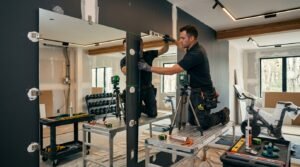
Choosing the Best Mirrors for Home Gym Environments
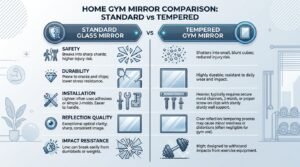
Standard Glass Mirrors vs Tempered Mirrors
Selecting the right mirror material is one of the most important decisions in any home gym mirror setup. Standard annealed glass is generally more affordable and provides excellent image clarity, making it a popular choice for budget-conscious homeowners. However, when broken, standard glass fractures into large, sharp shards that present a significant safety hazard, especially in active workout environments where heavy weights are frequently used.
Tempered glass undergoes a specialized heat-treatment process that dramatically increases its strength and alters the way it breaks. Instead of forming dangerous shards, tempered mirrors shatter into small, relatively blunt fragments that reduce the risk of severe injury. This enhanced safety profile makes tempered mirrors the preferred choice for commercial fitness facilities, dance studios, and premium residential gyms where durability and user protection are top priorities.
Beyond safety, tempered mirrors often exhibit greater resistance to impact and thermal stress. Home gyms located in garages or basements may experience temperature fluctuations throughout the year, making tempered glass particularly valuable in these environments. While the upfront cost is higher, many homeowners find the long-term durability and peace of mind well worth the investment.
Image quality between standard and tempered mirrors is generally comparable when sourced from reputable manufacturers. Therefore, the decision often comes down to balancing budget, installation location, and desired safety standards. For households with children, frequent weightlifting, or high-intensity workouts, tempered mirrors remain the recommended option despite the additional expense.
Ideal Mirror Thickness
Mirror thickness plays a crucial role in both performance and longevity. Thin mirrors may appear economical initially, but they are generally more susceptible to distortion, vibration, and breakage over time. A high-quality home gym wall mirror installation typically uses mirrors with sufficient thickness to maintain structural integrity while delivering a clear, undistorted reflection across the entire surface.
Thicker mirrors provide better rigidity, minimizing visual warping that can occur when glass flexes slightly under its own weight or due to wall irregularities. This improved stability is particularly beneficial during exercises requiring precise form assessment, where even minor distortions can affect visual perception.
Installation methods also vary according to mirror thickness. Heavier panels often require professional-grade mounting systems, specialized adhesives, and mechanical fasteners capable of supporting substantial weight. Proper wall preparation becomes increasingly important as mirror dimensions and thickness increase, ensuring long-term reliability and safety.
Ultimately, investing in appropriately thick, high-quality mirrors contributes to a more professional appearance, enhanced durability, and consistently accurate visual feedback throughout years of regular training.
Positioning Your Home Gym Mirror Setup for Maximum Performance
Proper positioning is the foundation of an effective home gym mirror setup. Even premium-quality mirrors lose much of their value if they are installed at the wrong height or angle. Professional fitness facilities carefully calculate mirror placement to ensure users can observe movement patterns without constantly adjusting their posture or shifting their attention away from the exercise itself. Home gym owners should follow the same principle by designing mirror locations around the exercises they perform most frequently rather than treating mirrors as decorative wall features.
The primary objective is to create uninterrupted visibility throughout the complete range of motion. Whether performing bodyweight exercises, Olympic lifts, yoga sequences, or resistance training, users should be able to monitor their posture from the starting position through the end of each repetition. This continuous visual feedback helps reinforce proper movement mechanics while reducing the likelihood of compensatory patterns that often develop when training without external observation.
Lighting conditions should also influence mirror positioning. Mirrors installed directly opposite windows may produce excessive glare during daylight hours, while mirrors facing poorly distributed artificial lighting can generate uneven reflections and distracting shadows. Instead, mirrors should reflect balanced illumination that clearly defines body position without creating bright hotspots or dark zones.
Long-term flexibility is equally important. A workout room rarely remains static, as equipment upgrades, new training styles, and evolving fitness goals often require layout changes. Planning mirror placement with future expansion in mind ensures the room remains functional even as additional equipment is introduced.
Determining the Correct Mirror Height
Mirror height significantly affects usability. Installing mirrors too high prevents users from monitoring foot placement during squats, lunges, or deadlifts, while mirrors positioned too low limit visibility during overhead movements. The most effective gym mirror placement allows users to observe their entire body naturally while standing, moving, and lifting without altering their posture simply to see their reflection.
Professional gym designers typically prioritize full-body visibility over decorative symmetry. Rather than centering mirrors solely according to wall dimensions, they calculate installation height based on average eye level, ceiling height, flooring thickness, and the intended exercise selection. This functional approach creates a more practical training environment than relying exclusively on interior design aesthetics.
Rooms with rubber flooring deserve special consideration because floor thickness changes the effective viewing height. Even a modest flooring upgrade slightly elevates users, influencing optimal mirror positioning. Accounting for these details during installation reduces the need for costly adjustments later.
When multiple family members share the gym, mirror height should accommodate a broad range of users. Large vertical mirror panels generally provide the greatest flexibility, ensuring shorter and taller individuals alike maintain full-body visibility throughout different exercises.
Choosing the Best Wall for Mirror Installation
Not every wall is equally suitable for a home gym mirror setup. The most effective installation typically faces the primary workout area, allowing users to monitor exercises naturally without excessive head rotation. Selecting the correct wall begins by identifying where most training activities occur and how equipment is arranged within the room.
Strength training spaces usually benefit from mirrors installed behind or beside free-weight zones, enabling users to evaluate squat depth, shoulder alignment, and bar path. Functional fitness areas often require broader wall coverage to accommodate dynamic movement patterns across larger floor spaces. Yoga and mobility rooms may prioritize one uninterrupted mirrored wall that supports full-body observation during stretching and balance exercises.
Window placement also affects wall selection. Installing mirrors directly opposite large windows can produce uncomfortable glare during certain times of day. Instead, positioning mirrors perpendicular to natural light often provides brighter, more evenly distributed reflections while preserving visibility.
Structural considerations should never be overlooked. Walls capable of supporting heavier mirror panels provide greater installation flexibility than partition walls with limited load-bearing capacity. Confirming wall composition before installation helps ensure mounting systems remain secure throughout years of regular use.
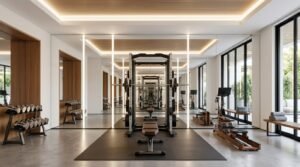
Home Gym Wall Mirror Installation: Professional Methods
Preparing the Wall Surface
Every successful home gym wall mirror installation begins with careful surface preparation. Even high-quality mirrors cannot compensate for uneven drywall, loose plaster, or unstable substrates. Thorough preparation not only improves appearance but also extends installation longevity by minimizing stress points that may eventually lead to cracking or adhesive failure.
Start by inspecting the wall for imperfections such as holes, moisture damage, peeling paint, or structural irregularities. Any defects should be repaired before installation begins. Moisture problems deserve particular attention because prolonged humidity exposure can weaken adhesives and gradually damage mirror backing, reducing lifespan.
Cleaning is another essential step. Dust, grease, and construction residue interfere with adhesive bonding, decreasing long-term reliability. Professional installers typically clean surfaces using non-residue solutions before allowing adequate drying time to ensure maximum adhesion strength.
Finally, confirm wall flatness using a long straightedge or level. Minor surface inconsistencies may appear insignificant initially but become highly visible once large mirror panels are installed. Correcting these imperfections beforehand produces a noticeably cleaner, more professional finish.
Adhesive vs Mechanical Mounting Systems
Homeowners often debate whether adhesives or mechanical fasteners provide the better installation method. In reality, the optimal solution frequently combines both approaches. High-performance mirror adhesives distribute weight evenly across the rear surface, reducing localized stress while maintaining a clean, frameless appearance.
Mechanical supports—including mirror clips, channels, or specialized brackets—provide additional security, particularly for large or heavy tempered mirrors. These systems serve as secondary protection should adhesive performance decline over many years of service. Commercial fitness centers commonly use both methods simultaneously to maximize safety.
Installation environments influence mounting decisions as well. Garage gyms subject to seasonal temperature variation may benefit from reinforced mounting systems that accommodate slight material expansion and contraction. Basements with stable environmental conditions generally experience fewer movement-related stresses, though secure mounting remains equally important.
Regardless of the chosen system, manufacturer guidelines should always be followed carefully. Improvised installation techniques may reduce costs initially but substantially increase long-term safety risks and maintenance requirements.
Lighting Strategies That Improve Mirror Performance
Natural Light Integration
Lighting and mirrors function as an integrated system rather than independent design elements. A carefully planned home gym mirror setup takes advantage of available natural light while minimizing glare and visual distractions. Daylight enhances color accuracy, improves mood, and creates a brighter training environment that many people find more motivating than artificial lighting alone.
Window orientation influences how mirrors interact with sunlight throughout the day. East-facing windows produce different lighting characteristics than west-facing windows, affecting reflection quality during morning and evening workouts. Understanding these patterns allows homeowners to position mirrors where light enhances visibility instead of interfering with it.
Large mirrors amplify daylight by reflecting it deeper into the room, reducing the need for artificial illumination during daytime sessions. This effect is particularly valuable in compact gyms where limited window area might otherwise create darker workout zones.
When excessive sunlight becomes problematic, adjustable window treatments offer a practical solution. Controlling incoming light preserves mirror clarity while preventing harsh reflections that can reduce exercise focus.
Artificial Lighting Design
Artificial lighting should complement mirror placement rather than compete with it. Ceiling-mounted fixtures positioned directly above users often cast shadows across the face and torso, making posture evaluation more difficult. Instead, evenly distributed lighting creates balanced reflections that improve movement analysis throughout the workout.
Modern LED fixtures are especially well suited for home gyms due to their energy efficiency, long lifespan, and consistent brightness. High-quality LEDs also generate less heat than traditional lighting technologies, contributing to a more comfortable workout environment during extended training sessions.
Color temperature deserves careful consideration. Neutral white lighting generally produces natural-looking reflections suitable for strength training, mobility work, and physique assessment. Extremely warm lighting may distort color perception, while excessively cool lighting can create an overly clinical atmosphere that feels less inviting.
Lighting controls add further flexibility by allowing brightness adjustments according to workout type, time of day, or personal preference. Dimmable systems can reduce glare during recovery sessions while providing maximum illumination for technical lifting or detailed form analysis.
Common Home Gym Mirror Setup Mistakes to Avoid
One of the most frequent mistakes is purchasing mirrors before completing a room layout. Without understanding equipment placement, movement pathways, and viewing angles, homeowners often install mirrors that become partially blocked once racks, benches, or storage systems are added.
Another common error involves selecting mirrors based solely on price. Low-cost mirrors sometimes exhibit subtle image distortion that becomes increasingly noticeable during technical exercises. Investing in higher-quality products typically results in better visual accuracy, greater durability, and lower replacement costs over time.
Improper installation remains another significant issue. Inadequate wall preparation, incorrect adhesive selection, or insufficient structural support may not produce immediate problems but can gradually compromise safety as mirrors age. Professional installation standards exist for good reason and should be followed whenever possible.
Finally, many people underestimate the importance of lighting. Even perfectly positioned mirrors perform poorly when reflections are obscured by glare, harsh shadows, or uneven illumination. Treating lighting and mirrors as a unified design system produces significantly better results than addressing each element independently.
Advanced Home Gym Mirror Ideas for Different Spaces
No two workout rooms are identical, which means every home gym mirror setup should be customized according to the available space, training style, and long-term fitness goals. While commercial gyms often have the luxury of large open areas, residential spaces require thoughtful planning to maximize every square foot. Understanding how mirrors interact with different room layouts allows homeowners to create highly functional training environments without unnecessary expense.
One of the biggest advantages of mirrors is their ability to visually transform a room. Properly positioned mirrors make narrow spaces appear wider, low ceilings seem taller, and darker rooms feel significantly brighter. This psychological effect improves the overall workout experience by creating a more open and inviting atmosphere, encouraging longer and more consistent training sessions.
Mirror layouts should also complement equipment placement. A room dedicated primarily to free weights requires different mirror coverage than one designed for yoga, spinning, or HIIT workouts. Rather than following generic design trends, homeowners should build their mirror strategy around movement patterns and daily training habits.
Finally, aesthetics should never come at the expense of practicality. Decorative mirror arrangements may look attractive in photographs, but continuous visibility and unobstructed reflections remain the primary objectives of a professional-quality home gym mirror setup.
Garage Home Gym Mirror Ideas
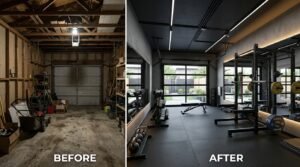
Garage gyms continue to grow in popularity because they offer generous floor space and excellent flexibility for strength training. However, garages also present unique challenges including fluctuating temperatures, higher humidity, and unfinished walls that require additional preparation before installation.
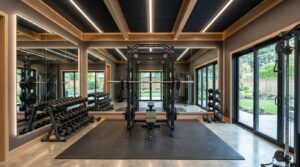
For garage environments, full-height tempered mirrors mounted along the primary lifting wall provide the greatest value. This arrangement allows users to monitor squats, deadlifts, overhead presses, and Olympic lifts while maintaining safe distance from racks and weight storage. Reinforced mounting systems are particularly important due to seasonal expansion and contraction that can affect wall materials.
Lighting deserves special attention because garages often rely on overhead fixtures that produce uneven illumination. Installing bright LED ceiling lights combined with wall-mounted accent lighting significantly improves reflection quality while reducing shadows during technical lifts.
Rubber flooring, organized equipment storage, and continuous mirror coverage transform an ordinary garage into a professional-level training facility that rivals many commercial gyms.
Spare Bedroom Home Gym Ideas
Converting a spare bedroom into a dedicated workout area requires balancing aesthetics with functionality. Unlike garages, bedrooms often feature finished drywall, climate control, and abundant natural light, making mirror installation somewhat simpler.
A single large mirror wall frequently provides the best solution for compact bedrooms. This configuration visually expands the room while supporting a wide variety of exercises, from resistance training to yoga and mobility work. Neutral wall colors reflected through the mirror create a brighter environment that feels considerably larger than its actual dimensions.
Furniture removal should precede installation planning to maximize available wall space. Built-in closets and windows naturally influence mirror placement, making careful measurements essential before purchasing panels.
Because bedrooms often double as multipurpose spaces, homeowners may also consider modular or sectional mirror systems that allow future room modifications without replacing the entire installation.
Mirror Maintenance and Long-Term Care
Installing mirrors represents a significant investment, making proper maintenance essential for preserving both appearance and performance. Fortunately, maintaining a high-quality home gym mirror setup requires relatively little effort when consistent cleaning habits are established.
Dust accumulation, fingerprints, and sweat residue gradually reduce reflection clarity. Regular cleaning with microfiber cloths and ammonia-free glass cleaners removes contaminants without damaging mirror coatings. Harsh chemicals should be avoided because prolonged exposure may deteriorate protective backing over time.
Humidity management also contributes significantly to mirror longevity. Although residential gyms rarely experience commercial-level moisture, garages and basements can develop elevated humidity levels that eventually affect adhesives and mirror backing. Adequate ventilation or dehumidifiers help maintain stable environmental conditions throughout the year.
Periodic inspection remains equally important. Homeowners should occasionally examine mounting hardware, adhesive integrity, and panel alignment for signs of movement or deterioration. Early detection allows minor issues to be corrected before they become expensive repairs.
Advanced Case Study: Transforming a Small Garage into a Professional Home Gym
Consider a homeowner with a standard single-car garage measuring approximately 12 by 20 feet. Initially, the space contained only a squat rack, adjustable bench, dumbbells, and basic rubber flooring. Although functional, workouts often felt cramped due to poor lighting, limited visibility, and inefficient equipment placement.
The first phase involved redesigning the room layout before purchasing mirrors. Equipment was repositioned to establish clear movement pathways and maximize usable floor area. A continuous wall opposite the primary lifting zone was selected for the home gym mirror setup, ensuring unobstructed visibility during compound exercises while minimizing glare from the garage door windows.
Tempered mirror panels extending nearly floor to ceiling were installed using both professional mirror adhesive and reinforced mechanical supports. Bright neutral-white LED ceiling fixtures replaced older fluorescent lights, dramatically improving reflection quality while eliminating distracting shadows. Weight storage was consolidated into vertical racks, freeing additional floor space and creating a cleaner visual environment.
Following installation, the transformation extended beyond aesthetics. The homeowner reported noticeable improvements in squat depth consistency, shoulder positioning during overhead presses, and deadlift setup. Real-time visual feedback reduced reliance on video recordings, allowing immediate technique correction during each training session.
Perhaps the most surprising outcome involved motivation. The larger appearance created by the mirrors made the garage feel comparable to a commercial fitness facility, encouraging longer workouts and greater training consistency. Over several months, improved exercise quality translated into measurable strength gains while reducing minor technique-related discomfort previously experienced during lifting.
This case illustrates how thoughtful planning—not merely purchasing expensive equipment—creates a safer, more effective, and visually appealing home gym that supports long-term fitness success.
Frequently Asked Questions About Home Gym Mirror Setup
Should mirrors cover an entire gym wall?
The answer depends on room size and training objectives. Full-wall mirrors provide uninterrupted visibility that benefits strength training, yoga, mobility work, and functional fitness. They also create the strongest illusion of expanded space, making compact rooms feel significantly larger.
Partial mirror installations remain practical for smaller budgets or specialized workout zones. For example, homeowners focusing primarily on free-weight exercises may only require mirror coverage behind the lifting area rather than throughout the entire room. The decision should prioritize training functionality over purely decorative considerations.
What is the safest mirror type for a home gym?
Tempered glass remains the safest choice for nearly every home gym mirror setup. Unlike standard glass, tempered mirrors break into small, relatively blunt fragments that greatly reduce injury risk if accidental damage occurs.
Although tempered mirrors typically cost more than standard mirrors, the additional durability and improved safety justify the investment, particularly in gyms where heavy weights are frequently used or children have access to the space.
How large should home gym mirrors be?
Mirror dimensions depend primarily on available wall space and exercise selection. Ideally, users should see their entire body throughout every movement without adjusting posture to remain within the reflection.
Larger mirrors also enhance room brightness and create stronger visual depth. When budgets permit, continuous wall coverage generally provides the greatest long-term value compared to several smaller individual mirrors.
Can I install gym mirrors myself?
DIY installation is certainly possible for smaller mirror panels when appropriate tools and mounting systems are used. However, large tempered mirrors are considerably heavier and require precise alignment, specialized adhesives, and secure structural support.
Professional installation often reduces safety risks while producing cleaner seams, improved durability, and more consistent alignment. For extensive mirror walls, hiring experienced installers is frequently the most cost-effective decision over the long term.
How do I prevent glare on gym mirrors?
Glare is best controlled through proper lighting design rather than mirror selection alone. Position mirrors perpendicular to major windows whenever possible, and use evenly distributed LED lighting instead of concentrating brightness in a single location.
Window coverings such as blinds or shades provide additional flexibility during different times of day. Proper planning ensures reflections remain clear without distracting bright spots that interfere with exercise performance.
Do mirrors really improve workout performance?
Yes. Numerous coaches and fitness professionals rely on mirrors because they provide immediate visual feedback that enhances posture awareness, movement consistency, and exercise technique. Watching body position throughout each repetition allows users to recognize errors before they become ingrained habits.
While mirrors should not replace coaching or video analysis entirely, they represent one of the most effective tools for improving movement quality during independent training sessions.
Conclusion: Building the Ideal Home Gym Mirror Setup
A professionally planned home gym mirror setup is one of the highest-value improvements any home fitness enthusiast can make. Beyond enhancing aesthetics, mirrors directly contribute to safer lifting, improved exercise mechanics, greater motivation, and a more spacious training environment. When carefully integrated with thoughtful lighting, strategic equipment placement, and high-quality installation methods, mirrors become an essential component of an effective workout space rather than a simple decorative feature.
Throughout this guide, we’ve explored the complete process—from selecting the best mirrors for home gym environments and planning gym mirror placement to understanding home gym wall mirror installation, lighting optimization, maintenance, and long-term design strategies. Each element works together to create a cohesive system that supports consistent progress while minimizing common installation mistakes.
Whether you’re converting a garage, finishing a basement, or designing a premium home fitness studio, success begins with careful planning instead of impulse purchases. Investing in durable tempered mirrors, selecting the right wall, ensuring proper mounting, and designing around your training style will produce benefits that last for many years.
Ultimately, the goal isn’t simply to install mirrors—it’s to build a training environment that motivates you to show up consistently, move correctly, and pursue continual improvement. A well-executed home gym mirror setup does exactly that, transforming an ordinary workout room into a professional-quality fitness space where performance, safety, and confidence grow together.