
A professionally designed dance studio is far more than an open room with a sound system and a hardwood floor. One of the most critical elements that directly impacts training quality, student performance, instructor effectiveness, and overall studio aesthetics is the mirror system. Yet many studio owners underestimate the complexity of dance studio mirror installation, assuming that mirrors can simply be mounted onto a wall without detailed planning. This misconception often leads to safety risks, distorted reflections, poor visibility, structural issues, and expensive replacement costs.
In modern dance education, mirrors serve as real-time feedback systems. They allow dancers to monitor posture, body alignment, technique execution, synchronization, and spatial awareness. Whether the studio specializes in ballet, contemporary dance, jazz, hip-hop, ballroom, or fitness-based dance programs, mirror placement significantly influences the learning environment. A poorly installed mirror can negatively affect instruction quality, while a professionally executed installation can transform the studio into a highly functional training space.
The demand for high-quality dance studio mirrors has increased dramatically as dance schools, fitness facilities, performing arts centers, and private training studios strive to create professional-grade environments. However, selecting the right mirror type is only one part of the process. Proper wall preparation, structural assessment, mounting techniques, safety backing, edge finishing, and maintenance planning all play essential roles in achieving long-term performance.
This comprehensive guide explores every aspect of dance studio mirror installation, from initial planning and mirror selection to advanced installation methods, safety protocols, troubleshooting, maintenance practices, and real-world implementation strategies. By the end of this guide, you will understand not only how to install mirrors correctly but also how industry professionals design mirror systems that remain safe, visually accurate, and durable for years of continuous use.
Understanding the Purpose of Dance Studio Mirrors
Why Mirrors Are Essential in Dance Training
Mirrors function as visual learning tools that provide immediate feedback during movement. Unlike verbal instruction alone, mirrors allow dancers to identify errors and make corrections in real time. This accelerated feedback loop significantly improves skill acquisition and muscle memory development.
Dance instructors rely heavily on mirrors to demonstrate movement patterns and positioning. Students can compare their posture directly with the instructor’s example, improving comprehension and execution. This visual comparison becomes especially important in disciplines requiring technical precision, such as ballet and contemporary dance.
Beyond technique development, mirrors enhance spatial awareness. Dancers learn how their movements occupy space, how they interact with group formations, and how their alignment affects overall performance quality. In ensemble settings, mirrors help synchronize movements among multiple performers.
From a business perspective, mirrors contribute to a professional studio atmosphere. Prospective students often associate full-wall mirrors with quality instruction and modern facilities. Therefore, mirror installation affects both operational effectiveness and studio marketability.
The Psychology Behind Mirror-Assisted Learning
Mirror-assisted learning is deeply connected to visual processing systems within the brain. When dancers observe their movements, they engage multiple cognitive pathways simultaneously. This combination of physical execution and visual observation accelerates skill refinement.
Research in motor learning demonstrates that visual feedback helps performers detect subtle movement errors more effectively than verbal feedback alone. This principle explains why mirrors remain standard equipment across dance disciplines worldwide.
Mirrors also build confidence. Students who can visually confirm improvements often experience higher motivation levels and greater training consistency. This psychological reinforcement contributes to long-term skill development.
However, improper mirror design can create visual distortions that negatively affect learning. This highlights the importance of professional mirror installation methods that maintain accurate reflections across the entire viewing area.
Planning a Dance Studio Mirror Installation Project
Evaluating Studio Requirements
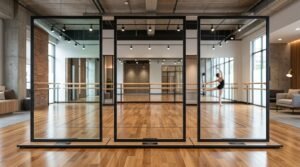
Every installation project begins with a detailed needs assessment. Studio dimensions, dance styles, student capacity, and instructional methods all influence mirror design decisions.
Large ballet studios typically require extensive mirror coverage spanning multiple walls. Smaller private studios may only need a primary instructional mirror wall. Understanding usage patterns helps determine the most effective installation approach.
Ceiling height also influences planning. Higher ceilings allow larger mirror panels, while lower ceilings may require strategic segmentation. The goal is always to maximize usable reflection space without compromising safety.
Lighting conditions should be evaluated before installation. Natural and artificial light sources interact with mirror surfaces and can affect visibility. Proper planning ensures optimal reflection quality throughout the day.
Measuring the Installation Area
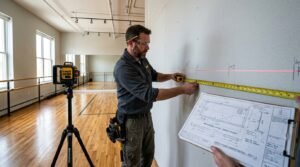
Accurate measurements form the foundation of successful installation. Every wall dimension should be recorded precisely, including width, height, corner conditions, electrical outlets, HVAC vents, and structural obstacles.
Professionals typically measure multiple points across each wall because construction variations can create inconsistencies. Even small discrepancies can affect mirror alignment during installation.
Wall flatness should also be assessed. Uneven surfaces may require corrective preparation before mirror mounting begins. Failure to address wall irregularities can create visible distortions and stress points.
Detailed measurement documentation minimizes installation errors and ensures accurate material ordering.

Choosing the Right Mirrors for Dance Studios
Glass Mirror Options
Standard float glass mirrors are common but not always ideal for professional dance environments. While affordable, they may introduce slight distortions that affect reflection accuracy.
Low-iron glass mirrors offer superior clarity by reducing the green tint found in traditional glass. These mirrors provide more accurate reflections and are often preferred in professional dance facilities.
Tempered mirrors improve safety by breaking into smaller fragments when damaged. Although tempered glass increases costs, many studio owners consider the investment worthwhile for liability reduction.
Laminated mirrors represent the highest safety standard. Multiple layers remain bonded together even when broken, reducing injury risks significantly.
Mirror Thickness Considerations
Mirror thickness directly affects durability and visual quality. Thin mirrors may flex slightly, creating distorted reflections that interfere with dance instruction.
Professional installations commonly utilize thicker mirror panels that maintain consistent flatness. These mirrors produce clearer reflections and withstand long-term use more effectively.
Thickness also influences mounting requirements. Heavier mirrors require stronger support systems and careful structural planning. Professional installers account for these factors during project design.
Selecting appropriate thickness balances cost, performance, safety, and installation complexity.

Wall Preparation Before Installation
Structural Assessment
Before installing mirrors, wall structures must be evaluated thoroughly. Drywall alone may not provide adequate support for large mirror systems.
Professional installers identify wall studs, masonry surfaces, steel framing, or reinforced backing structures. Understanding load-bearing capabilities helps determine the safest mounting strategy.
Structural deficiencies should be corrected before installation begins. Reinforcement measures may include plywood backing, additional framing, or specialized support systems.
Ignoring structural assessment increases the risk of mirror failure and potential injuries.
Surface Preparation
Wall surfaces must be clean, dry, stable, and relatively flat. Loose paint, damaged drywall, moisture problems, and surface contaminants can compromise installation quality.
Repairing imperfections before mounting ensures stronger adhesive bonds and more consistent mirror alignment. Surface preparation often determines long-term installation success.
Professionals frequently use levels, laser measurement systems, and straightedges to verify wall readiness before installation proceeds.
Proper preparation reduces future maintenance issues and extends mirror lifespan.
Dance Studio Mirror Installation Methods
Adhesive Installation Systems
Mirror adhesives provide strong support while minimizing visible hardware. High-quality mirror adhesives are specifically formulated to avoid damaging reflective coatings.
Application patterns vary based on mirror size, weight, and manufacturer specifications. Uniform adhesive distribution prevents pressure concentrations and reduces stress-related failures.
Adhesive installations often create clean, modern aesthetics. However, proper curing procedures must be followed carefully to achieve maximum strength.
Environmental conditions such as temperature and humidity can affect adhesive performance, making installation timing an important consideration.
Mechanical Mounting Systems
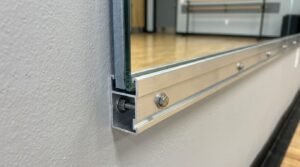
Mechanical systems use clips, channels, brackets, and support rails to secure mirrors physically. These systems provide immediate structural support and facilitate future replacement if necessary.
Bottom channels commonly support mirror weight while upper restraints prevent tipping. This configuration distributes loads efficiently and enhances safety.
Professional installers often combine mechanical supports with adhesives for maximum stability. This hybrid approach creates redundancy that improves long-term reliability.
Mechanical systems are especially beneficial for large commercial dance studios where durability and serviceability are priorities.
Safety Standards and Risk Management
Preventing Mirror Failures
Mirror failures rarely occur without warning signs. Improper mounting, structural weaknesses, moisture exposure, and installation shortcuts often contribute to eventual problems.
Regular inspections help identify issues before they become dangerous. Loose hardware, visible cracks, edge damage, and wall movement should be addressed immediately.
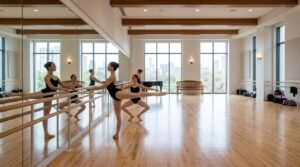
Safety-backed dance mirrors provide an additional layer of protection. Special backing films help retain glass fragments if breakage occurs.
Investing in quality materials and professional installation significantly reduces failure risks.
Compliance and Liability Considerations
Studio owners should understand local building regulations governing large mirror installations. Compliance requirements may address safety glazing, mounting methods, and occupancy classifications.
Insurance providers may also have specific expectations regarding mirror safety. Failure to meet industry standards could complicate liability claims after accidents.
Documenting installation procedures, material specifications, and inspection records demonstrates responsible facility management practices.
Maintaining compliance protects both studio operators and students.
Optimizing Mirror Placement and Viewing Angles
Determining Ideal Mirror Height
Mirror height should accommodate the primary user population while maximizing visibility across the studio. Most installations position mirrors to provide full-body reflections during movement.
Floor-to-ceiling installations offer maximum coverage but require greater investment. Partial-height installations may still achieve functional objectives when designed correctly.
Viewing distances also influence placement decisions. Mirrors should remain effective from multiple positions throughout the room.
Professional planning ensures consistent visibility for dancers of varying heights.
Managing Reflection Quality
Reflection quality depends on mirror flatness, lighting design, and installation precision. Even premium mirrors can produce poor results if installed improperly.
Lighting fixtures should be positioned to minimize glare while maintaining adequate illumination. Balanced lighting enhances reflection clarity and reduces visual fatigue.
Mirror seams should be aligned carefully to avoid distracting visual interruptions. Precision installation techniques create a more professional appearance.
Attention to reflection quality improves both functionality and aesthetics.
Advanced Case Study and Real-World Application
Professional Ballet Studio Transformation
Consider a ballet academy converting a 1,500-square-foot commercial space into a professional training facility. Initial planning identified the need for a full-wall mirror system capable of supporting daily classes, rehearsals, and performance preparation.
The project team began with structural analysis, revealing insufficient wall support for large mirror panels. Reinforcement measures included plywood backing installation behind drywall surfaces and additional framing at critical support points. These modifications increased load-bearing capacity substantially.
Next, low-iron safety-backed mirrors were selected to maximize reflection accuracy. Because ballet instruction relies heavily on posture assessment and precise alignment, minimizing visual distortion became a primary objective. Mirror panels extended nearly the full length of the instructional wall, providing uninterrupted viewing areas.
Installation combined commercial-grade mirror adhesive with aluminum support channels. This hybrid system improved structural security while maintaining a clean appearance. After installation, lighting adjustments reduced glare and enhanced reflection consistency. The result was a professional environment supporting advanced instruction, improved student performance, and enhanced studio reputation.
Frequently Asked Questions
How thick should dance studio mirrors be?
Mirror thickness depends on installation size, support methods, and performance requirements. Professional studios typically favor thicker mirrors because they resist flexing and maintain more accurate reflections. Thin mirrors can develop visual distortions that interfere with dance instruction and technique correction.
Larger mirror panels benefit from increased thickness because structural loads are distributed more effectively. This reduces the likelihood of bowing, vibration, and long-term stress damage. Thicker mirrors also tend to withstand daily operational demands more successfully.
Installation methods influence thickness selection as well. Adhesive systems, mechanical supports, and hybrid mounting solutions each have different performance characteristics. Professional installers evaluate all project variables before recommending specifications.
Ultimately, selecting appropriate thickness should prioritize reflection quality, safety, durability, and long-term value rather than focusing solely on initial costs.
Are safety-backed mirrors necessary for dance studios?
Safety backing is strongly recommended for most dance environments. Although standard mirrors may function adequately under normal conditions, safety-backed products provide additional protection if breakage occurs.
Specialized backing materials help retain glass fragments after impact, reducing injury risks for dancers and instructors. This feature becomes particularly important in active environments where accidental contact may occur.
Safety-backed mirrors also support risk management objectives. Many facility operators view them as essential investments because they demonstrate commitment to occupant safety.
While safety-backed mirrors increase project costs, the benefits frequently outweigh the additional expense, especially in commercial facilities with high daily occupancy.
Can mirrors be installed directly onto drywall?
Direct drywall installation is not always advisable, particularly for large mirrors. Drywall alone often lacks sufficient strength to support significant mirror weight safely over extended periods.
Professional installers typically identify structural framing members and may add reinforcement materials behind wall surfaces. These measures improve load distribution and reduce failure risks.
Installation success depends on mirror size, wall construction, mounting methods, and environmental conditions. Smaller mirrors may perform adequately with limited reinforcement, but larger dance studio systems usually require more robust support structures.
A thorough structural assessment should always precede installation planning.
What is the best mounting method for dance studio mirrors?
The most effective mounting approach often combines adhesive bonding with mechanical support systems. This hybrid strategy provides immediate physical support while creating strong long-term attachment.
Mechanical components such as channels and clips distribute loads effectively and facilitate maintenance. Adhesives help stabilize mirror surfaces and minimize movement over time.
Project-specific factors influence final decisions. Wall construction, mirror dimensions, safety requirements, and budget considerations all affect mounting strategy selection.
Professional installers evaluate these variables carefully to develop optimized installation solutions.
How long do professionally installed dance studio mirrors last?
High-quality mirror systems can remain functional for decades when installed correctly and maintained properly. Longevity depends on material quality, environmental conditions, and maintenance practices.
Moisture exposure, structural movement, impact damage, and poor installation techniques are among the most common factors reducing lifespan. Regular inspections help identify developing issues before they become significant problems.
Professional installation significantly improves durability by ensuring proper support, alignment, and load distribution. Premium mirrors combined with quality mounting systems often provide exceptional long-term performance.
Routine cleaning and preventive maintenance further extend service life.
How do you prevent mirror distortion?
Distortion prevention begins with selecting high-quality mirror products. Low-iron glass and premium manufacturing processes generally produce superior reflection accuracy.
Proper wall preparation is equally important. Uneven surfaces can transfer irregularities into mirror panels, affecting visual quality. Structural support systems must maintain consistent mirror flatness.
Installation precision also plays a critical role. Excessive pressure, improper adhesive application, or inadequate support can introduce distortions even in premium mirrors.
Combining quality materials with professional installation practices delivers the best results.
Conclusion and Roadmap Forward
A successful dance studio mirror installation project involves far more than attaching glass panels to a wall. It requires careful planning, structural evaluation, mirror selection, safety engineering, precision mounting, lighting coordination, and ongoing maintenance. Every decision influences reflection quality, dancer safety, instructional effectiveness, and long-term facility performance.
Professional studio owners recognize that mirrors function as essential training tools rather than decorative elements. When installed correctly, they improve technique development, enhance student engagement, support instructor effectiveness, and elevate the overall studio experience. Conversely, poorly planned installations can introduce safety risks, visual distortions, and costly maintenance challenges.
The most effective approach begins with a comprehensive assessment of studio requirements. From there, selecting appropriate mirror materials, ensuring adequate structural support, implementing proven mounting methods, and maintaining rigorous safety standards creates a foundation for long-term success. Investing in quality components and professional installation practices often delivers substantial returns through durability, reduced liability, and enhanced user satisfaction.
As you move forward with your project, focus on building a mirror system that prioritizes accuracy, safety, and performance. By applying the strategies outlined throughout this guide, you can create a professional-grade dance environment that supports dancers, instructors, and studio operations for many years to come. A properly executed dance studio mirror installation is not merely an upgrade—it is a critical investment in the future success of the entire facility.