
Choosing between an aluminium frame vs frameless glass door is one of the most important decisions when designing a residential or commercial property. Although both options use high-quality glass, their structural systems, aesthetics, durability, maintenance requirements, installation methods, and long-term costs differ significantly. Many homeowners focus only on appearance, but professionals understand that the wrong choice can affect maintenance expenses, energy efficiency, safety, and even property value for years.
Today’s architecture emphasizes natural lighting, open spaces, and clean modern aesthetics. Glass doors have become an essential design feature because they visually expand interiors while allowing maximum daylight penetration. However, selecting the right door system involves much more than choosing what looks attractive in a showroom. Every project has unique structural requirements, environmental conditions, usage frequency, and budget considerations that should influence the final decision.
When comparing aluminium frame vs frameless glass door, it is important to evaluate each option from multiple perspectives rather than relying on visual appeal alone. Aluminium framed doors provide outstanding structural support, making them suitable for high-traffic environments and large openings. Frameless glass doors, on the other hand, create a minimalist appearance that has become increasingly popular in luxury homes, offices, hotels, retail stores, and premium commercial developments.
This comprehensive guide explains every major factor that professionals consider before recommending one system over another. You’ll learn how each door performs in terms of strength, safety, thermal efficiency, maintenance, installation complexity, lifespan, customization, and total ownership cost. We’ll also examine real-world applications, industry best practices, common installation mistakes, and practical scenarios to help you determine which option delivers the best long-term value.
Whether you are renovating a home, building a commercial property, or simply exploring modern glass door designs, this guide provides expert-level insights that go far beyond basic product comparisons.
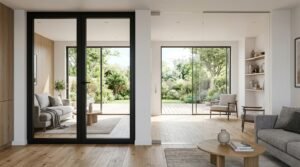
Understanding Aluminium Frame vs Frameless Glass Door
What Is an Aluminium Framed Glass Door?
An aluminium framed glass door consists of tempered or laminated glass panels enclosed within precision-engineered aluminium profiles. These profiles serve as the structural backbone of the system, distributing loads evenly across the door while providing attachment points for hinges, locks, handles, rollers, and weather seals.
One of the greatest strengths of aluminium is its exceptional strength-to-weight ratio. Unlike traditional steel frames, aluminium offers excellent durability without excessive weight. Modern powder-coated aluminium also provides outstanding corrosion resistance, making it suitable for humid environments, coastal regions, and exterior applications where moisture exposure is common.
Another significant advantage is design flexibility. Aluminium frames are available in numerous finishes, including matte black, white, bronze, silver, wood-grain textures, and custom powder-coated colors. This versatility allows architects and designers to coordinate door systems with various interior and exterior styles while maintaining long-term durability.
Because the frame absorbs much of the structural stress, the glass itself experiences reduced loading compared to frameless systems. This improves stability during frequent operation and contributes to the long service life of aluminium framed doors.
What Is a Frameless Glass Door?
A frameless glass door eliminates visible framing around the edges, creating a clean, uninterrupted sheet of glass. Instead of relying on surrounding aluminium profiles, specialized hardware such as floor springs, patch fittings, pivot hinges, and concealed clamps securely supports the tempered glass panel.
The primary appeal of frameless systems lies in their minimalistic appearance. Without bulky framing, spaces appear larger, brighter, and more luxurious. This design philosophy has become especially popular in modern architecture, luxury retail environments, executive offices, and premium residential interiors.
Because structural support comes primarily from precision-engineered hardware rather than perimeter framing, frameless doors require thicker tempered or laminated safety glass. This increases manufacturing precision and demands highly accurate installation techniques to ensure proper alignment, smooth operation, and long-term reliability.
Professional installation is particularly important because even slight misalignment can affect door movement, hardware wear, and overall performance. When installed correctly, however, frameless systems deliver exceptional elegance and create a seamless transition between indoor and outdoor spaces.
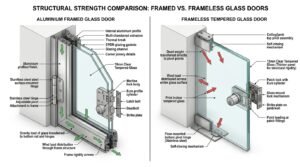
Design Comparison
Visual Appearance
When comparing aluminium frame vs frameless glass door, appearance is often the deciding factor for homeowners and architects.
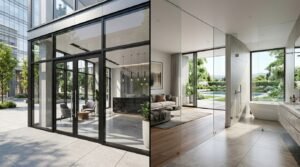
Aluminium framed doors introduce visible structural lines that create definition and contrast. Black aluminium frames have become especially popular in contemporary architecture because they provide an industrial-inspired aesthetic while emphasizing geometric design elements.
Frameless doors prioritize visual simplicity. Since almost no framing interrupts the glass surface, the eye naturally perceives the surrounding space as larger and more open. This effect is particularly valuable in compact apartments, luxury homes, hotels, and modern office interiors where maximizing perceived space is a priority.
Natural light also behaves differently in each system. Frameless designs allow slightly greater uninterrupted light transmission because there are fewer opaque structural components. While the difference may appear subtle, it becomes noticeable across large glass installations.
Ultimately, those seeking bold architectural definition often prefer aluminium frames, whereas individuals pursuing ultra-modern minimalism generally favor frameless glass doors.
Architectural Compatibility
Different architectural styles benefit from different door systems.
Traditional homes often integrate more naturally with aluminium framed doors because the visible frame complements classic window systems, decorative moldings, and structured façades. The frames help establish symmetry throughout the building envelope.
Contemporary architecture, by contrast, frequently embraces frameless systems due to their clean lines and unobtrusive appearance. Luxury villas, premium offices, designer showrooms, and upscale commercial buildings increasingly adopt frameless doors to emphasize openness and sophistication.
Architects also consider surrounding materials such as stone, wood, concrete, marble, and steel when selecting the appropriate door system. Aluminium frames can intentionally contrast with natural materials, while frameless glass blends seamlessly into almost any design language.
Successful projects prioritize harmony between the door system and the overall architectural vision rather than selecting products based solely on current design trends.
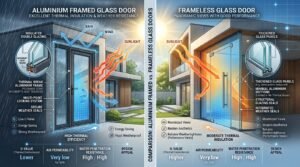
Durability and Structural Performance
Aluminium Frame Strength
From a structural perspective, aluminium framed systems offer exceptional durability.
The frame distributes mechanical loads across the entire door assembly, reducing stress concentrations within the glass panel itself. This makes aluminium doors highly suitable for commercial entrances, schools, hospitals, shopping centers, and other high-traffic environments.
Modern aluminium alloys also resist corrosion, UV exposure, temperature fluctuations, and moisture exceptionally well. Powder-coated finishes maintain their appearance for many years with minimal maintenance, making them ideal for exterior installations.
Because hardware attaches directly to the aluminium frame rather than solely to the glass, repairs and component replacements are generally simpler and less expensive over the life of the installation.
Frameless Door Strength
Although frameless doors appear delicate, they are manufactured using thick tempered safety glass engineered to withstand significant impact and operational loads.
The absence of a surrounding frame means that premium-quality hinges, floor springs, and patch fittings play a much larger role in structural performance. High-quality hardware is therefore essential to ensure durability.
Frameless systems perform exceptionally well in interior environments with controlled conditions. However, exterior applications require careful engineering to account for wind pressure, thermal movement, and weather exposure.
When properly designed and professionally installed, frameless doors provide decades of reliable service while maintaining their elegant appearance.
Safety Considerations
Both aluminium framed and frameless glass doors typically use tempered safety glass, which is significantly stronger than ordinary annealed glass. If broken, tempered glass shatters into relatively small blunt fragments that reduce the risk of serious injury.
For enhanced security, laminated safety glass offers an additional protective layer because the interlayer holds broken glass together after impact. This feature improves burglary resistance and increases occupant safety.
Aluminium framed systems generally provide additional protection around glass edges, reducing accidental edge damage during daily use. Frameless systems require greater care because exposed glass edges remain more vulnerable to impact.
Proper hardware selection, accurate installation, and routine maintenance are equally important for ensuring long-term safety regardless of the chosen door system.

Cost Comparison: Aluminium Frame vs Frameless Glass Door
Initial Purchase Cost
When evaluating aluminium frame vs frameless glass door, price is often one of the first considerations. However, experienced architects and contractors know that the initial purchase price tells only part of the story. The total cost of ownership includes manufacturing, installation, hardware quality, maintenance, repairs, and long-term durability. A lower upfront price may eventually lead to higher maintenance expenses, while a premium investment can provide better long-term value.
Aluminium framed glass doors generally cost less than frameless systems because their structural frame provides stability using thinner glass panels. Manufacturers can fabricate these systems more efficiently, and installation tolerances are more forgiving. As a result, homeowners working within a limited budget often select aluminium framed doors without sacrificing durability or functionality.
Frameless glass doors usually command a higher price due to the specialized manufacturing process. The glass must be thicker, precisely cut, polished, tempered, and drilled to accommodate premium patch fittings, pivot hinges, floor springs, and locking systems. Every component must meet strict engineering tolerances because there is no surrounding frame to compensate for minor alignment errors.
Another factor influencing cost is customization. Both systems can be customized, but frameless doors typically require bespoke hardware and precision fabrication, increasing production costs. Luxury finishes, oversized panels, and premium soft-closing hardware further elevate the final price.
Installation Cost
Installation expenses vary significantly between the two systems.
Aluminium framed doors are relatively straightforward to install because the frame allows installers to make minor adjustments during positioning. This reduces labor time and minimizes the likelihood of expensive rework.
Frameless glass doors demand highly experienced installers. Every millimeter matters because the hardware directly supports the glass panel. Improper leveling can result in uneven gaps, poor door alignment, difficult operation, premature hardware wear, or even glass stress fractures.
Commercial installations often require laser alignment equipment, specialized lifting tools, and multiple technicians to safely handle heavy glass panels. Consequently, installation labor for frameless systems is generally higher than for aluminium framed alternatives.
Property owners should always prioritize installer experience over the lowest quotation. Poor installation can dramatically shorten the lifespan of either door system.
Long-Term Ownership Costs
Many buyers focus exclusively on purchase price while overlooking long-term expenses.
Aluminium framed systems often require minimal maintenance beyond occasional cleaning, lubrication of hinges, and periodic weather seal replacement. Powder-coated finishes maintain their appearance for many years without repainting or extensive repairs.
Frameless systems demand more frequent hardware inspections because pivot hinges, floor springs, and patch fittings experience continuous operational loads. Although premium hardware is designed for longevity, replacement components can be more expensive than conventional framed door hardware.
Cleaning also differs between the two systems. Frameless doors showcase fingerprints, water spots, and smudges more prominently, requiring more frequent cleaning to preserve their luxurious appearance.
When lifecycle costs are considered, aluminium framed doors frequently provide superior long-term value, particularly in high-traffic commercial environments.
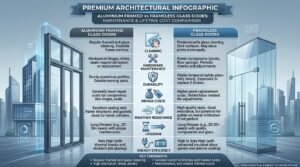
Energy Efficiency and Weather Performance
Thermal Insulation
Energy efficiency has become an increasingly important consideration for modern construction projects.
Aluminium framed systems equipped with thermal break technology significantly reduce heat transfer between indoor and outdoor environments. Combined with double glazing or insulated glass units, these doors contribute to lower heating and cooling costs.
Weather seals integrated into aluminium frames minimize air leakage, reducing drafts and improving indoor comfort. Properly installed framed systems therefore perform exceptionally well in climates with extreme temperatures.
Frameless glass doors generally provide less insulation because they rely on minimal perimeter sealing. Although modern frameless hardware incorporates weather-resistant gaskets, these systems cannot always match the airtight performance of premium framed doors.
Buildings targeting high energy-efficiency ratings often benefit from advanced aluminium framing systems specifically engineered to minimize thermal bridging.
Water and Wind Resistance
Exterior doors must withstand challenging environmental conditions.
Aluminium framed doors incorporate engineered drainage channels, compression seals, and weather strips that effectively prevent water penetration during heavy rainfall. These features make them especially suitable for exterior entrances, balconies, patios, and commercial storefronts.
Frameless doors perform well in sheltered locations but require precise engineering for exposed environments. Wind-driven rain can exploit small installation imperfections if seals are not properly adjusted.
Architects therefore carefully evaluate local climate conditions before specifying frameless exterior systems. Coastal regions with strong winds, heavy rainfall, or salt exposure often benefit from framed solutions that provide superior weather protection.
Proper maintenance of seals and drainage systems remains essential regardless of door type.
Maintenance Requirements
Cleaning and Routine Care
Maintenance plays a major role in preserving long-term performance.
Aluminium framed doors require regular cleaning using mild detergent and soft cloths. The frame protects glass edges from accidental impacts while concealing minor dust accumulation around perimeter joints.
Frameless doors demand more frequent cleaning because every fingerprint, water stain, and dust particle remains fully visible. Premium glass cleaners help maintain transparency while preventing streaks that reduce visual appeal.
Routine inspection should also include hardware tightening, lubrication of moving components, and verification of proper door alignment.
Preventive maintenance is considerably less expensive than major hardware replacement.
Hardware Maintenance
Hardware quality directly influences door longevity.
Aluminium framed doors typically use conventional hinges, rollers, handles, and locking systems that are widely available and relatively inexpensive to replace.
Frameless systems rely on precision-engineered hardware manufactured to exact tolerances. Floor springs, hydraulic closers, pivot hinges, and patch fittings require periodic adjustment to maintain smooth operation.
Ignoring routine hardware servicing can increase friction, accelerate wear, and place additional stress on the tempered glass.
Professional inspections every one to two years are recommended for commercial frameless installations with heavy daily usage.
Security Comparison
Which Door Offers Better Security?
Security depends on multiple variables beyond the presence or absence of a frame.
Aluminium framed doors naturally provide stronger support for multi-point locking systems because the frame distributes locking forces across the entire assembly. Reinforced strike plates further improve resistance against forced entry.
Frameless glass doors also achieve high security when paired with laminated safety glass and premium locking hardware. However, exposed glass edges require careful protection against accidental impacts.
Commercial security can be enhanced through electronic access control, magnetic locks, smart locking systems, and security glazing regardless of the selected door style.
The most secure installations combine high-quality glass, engineered hardware, professional installation, and regular maintenance.
Best Applications for Each Door Type
Residential Applications
Modern homes increasingly utilize both systems depending on room function.
Aluminium framed doors perform exceptionally well for exterior entrances, patios, balconies, laundry rooms, and utility spaces where weather resistance and energy efficiency are priorities.
Frameless glass doors excel inside the home, particularly for bathrooms, home offices, wine rooms, wardrobes, and luxury interior partitions where aesthetics take precedence over environmental protection.
Many architects intentionally combine both systems within a single property to maximize their respective advantages.
Commercial Applications
Commercial environments place greater emphasis on durability and operational reliability.
Office buildings frequently use frameless glass doors in reception areas, executive offices, conference rooms, and interior partitions to create an open, collaborative atmosphere.
Retail stores appreciate frameless entrances because uninterrupted glass improves product visibility and encourages customer engagement.
Hospitals, schools, airports, shopping malls, and industrial buildings generally prefer aluminium framed systems due to their superior durability, easier maintenance, and ability to withstand constant public use.
Choosing the appropriate system ultimately depends on balancing aesthetics, operational demands, safety requirements, and long-term maintenance objectives.
Advanced Case Study: Choosing Between Aluminium Frame vs Frameless Glass Door
Case Study: Luxury Villa and Commercial Office Project
To better understand the practical differences between an aluminium frame vs frameless glass door, consider a mixed-use development consisting of a luxury residence on the upper floors and premium office space on the ground level. The owner wanted a modern architectural appearance while ensuring durability, safety, energy efficiency, and long-term value.
For the residential portion, the design team selected frameless glass doors for interior applications, including bathrooms, walk-in closets, and home office partitions. These areas benefited from the clean, minimalist appearance that frameless systems provide. The uninterrupted glass created an illusion of larger rooms while maximizing natural light. High-quality tempered glass with premium stainless-steel patch fittings ensured both elegance and structural reliability.
For the villa’s exterior patio and balcony entrances, however, the architects chose aluminium framed glass doors. These locations were directly exposed to heavy rainfall, strong winds, and significant temperature changes throughout the year. Thermal-break aluminium frames combined with double-glazed insulated glass units provided superior weather resistance, improved thermal insulation, and lower energy consumption.
The commercial office adopted a hybrid approach. Reception areas and executive meeting rooms featured frameless glass doors to create a sophisticated corporate image. Meanwhile, employee entrances, emergency exits, and service access points utilized aluminium framed systems capable of handling thousands of daily opening and closing cycles without excessive maintenance.
After three years of operation, maintenance records revealed that the aluminium framed doors required only routine lubrication and weather seal inspections. The frameless systems continued performing exceptionally well but demanded periodic adjustment of floor springs and pivot hardware due to constant use. The project demonstrated that selecting the appropriate door system according to functional requirements rather than aesthetics alone delivered the greatest long-term value.
Frequently Asked Questions (FAQ)
Is an aluminium framed glass door stronger than a frameless glass door?
Structurally, aluminium framed glass doors generally offer greater overall strength because the aluminium profile distributes mechanical loads across the entire assembly. This reduces stress on the glass and protects vulnerable edges from accidental impacts.
Frameless glass doors rely almost entirely on thick tempered safety glass and specialized hardware. While modern tempered glass is extremely durable, the exposed edges require greater care during installation and daily use. The hardware also plays a much more critical role in maintaining structural stability.
For high-traffic commercial entrances, educational institutions, hospitals, and industrial facilities, aluminium framed systems usually provide superior long-term durability. However, properly engineered frameless doors remain highly reliable for residential interiors and premium commercial environments when installed by experienced professionals.
Which option is better for modern home design?
For homeowners seeking a luxurious minimalist appearance, frameless glass doors are often the preferred choice. Their clean lines, uninterrupted glass surfaces, and seamless integration with contemporary interiors create an open and spacious atmosphere that complements modern architecture.
However, aesthetics should never be the sole deciding factor. Exterior locations require consideration of weather exposure, security, insulation, and maintenance requirements. In these situations, aluminium framed doors frequently outperform frameless alternatives while still offering attractive contemporary designs.
Many architects now combine both systems within the same residence. Frameless doors enhance interior living spaces, while aluminium framed systems provide superior performance for patios, balconies, and exterior entrances.
Which glass door requires less maintenance?
Aluminium framed glass doors generally require less maintenance over their service life. The frame protects glass edges, supports hardware, and conceals minor dirt accumulation around the perimeter. Cleaning typically involves washing both the frame and glass while periodically lubricating hinges and inspecting weather seals.
Frameless glass doors require more frequent cleaning because fingerprints, dust, and water spots remain highly visible on uninterrupted glass surfaces. Hardware components such as floor springs, pivot hinges, and patch fittings also benefit from periodic professional inspection and adjustment.
Neither system demands excessive maintenance when installed correctly, but aluminium framed doors typically offer lower long-term maintenance costs in demanding environments.