
Choosing the right door may seem like a simple design decision, but in reality, it has a significant impact on a property’s functionality, aesthetics, energy efficiency, privacy, security, and long-term maintenance costs. Homeowners, architects, interior designers, and builders frequently face the challenge of deciding between a Glass Door vs Wooden Door when planning new construction projects, renovations, or interior upgrades.
The debate surrounding Glass Door vs Wooden Door is not merely about appearance. Each option offers distinct advantages and disadvantages that affect daily living experiences. Glass doors are often associated with contemporary architecture, enhanced natural lighting, and open spatial concepts. Wooden doors, on the other hand, are celebrated for their timeless appeal, privacy, durability, and traditional craftsmanship.
In today’s residential and commercial environments, door selection has become increasingly strategic. Modern homeowners want doors that not only look attractive but also contribute to energy efficiency, security, acoustic control, and property value. The wrong choice can lead to higher maintenance expenses, reduced privacy, increased energy consumption, or even security concerns over time.
When evaluating Glass Door vs Wooden Door, several factors must be considered simultaneously. Material quality, installation environment, climate conditions, usage frequency, budget constraints, architectural style, and maintenance expectations all influence which option will deliver the best long-term value. What works perfectly for a modern urban apartment may not be ideal for a traditional family home or a commercial office setting.Understanding the Glass Door vs Wooden Door debate helps homeowners make smarter design and investment decisions.
This comprehensive guide explores every critical aspect of the Glass Door vs Wooden Door comparison. We will analyze structural performance, durability, security, insulation capabilities, maintenance requirements, aesthetic impact, environmental considerations, installation costs, and practical real-world applications. By the end of this guide, you will possess the knowledge necessary to make a confident and informed decision based on your specific requirements rather than marketing claims or design trends.
Whether you are building a new home, remodeling an existing property, upgrading interior spaces, or selecting doors for a commercial project, this guide provides a complete framework for determining which option aligns best with your objectives.Before investing in a new entryway, comparing Glass Door vs Wooden Door options can prevent costly mistakes.

Understanding Glass Doors and Wooden Doors
What Defines a Glass Door?
Glass doors have evolved significantly over the last two decades. Modern glass doors utilize advanced engineering technologies that dramatically improve strength, safety, thermal performance, and durability. Today’s glass doors commonly feature tempered glass, laminated glass, insulated glass units, and reinforced framing systems designed to withstand daily wear and environmental stress.
One of the primary reasons homeowners choose glass doors is their ability to maximize natural light. Natural illumination improves interior aesthetics while reducing dependence on artificial lighting during daylight hours. This creates brighter, more inviting living spaces and can contribute to lower electricity consumption.
Modern glass doors are available in various configurations, including sliding doors, pivot doors, French doors, frameless doors, and folding systems. This versatility allows architects and designers to integrate glass into both contemporary and transitional architectural styles.
Despite their visual appeal, glass doors introduce unique considerations regarding privacy, security, cleaning requirements, and climate performance. Understanding these factors is essential before making a final investment decision.
What Defines a Wooden Door?
Wooden doors represent one of the oldest and most trusted building materials in architectural history. Their popularity stems from their exceptional versatility, natural beauty, structural integrity, and ability to complement virtually any architectural style.
Wood doors are manufactured from various species including oak, mahogany, teak, pine, walnut, cedar, and engineered wood composites. Each material offers distinct characteristics relating to appearance, durability, moisture resistance, and cost.
One of the greatest strengths of wooden doors is their ability to provide privacy and insulation. The solid composition naturally reduces sound transmission while creating a physical barrier that contributes to thermal efficiency.
Wooden doors also offer extensive customization opportunities. Homeowners can select from countless finishes, carvings, panel designs, stains, paints, and decorative treatments. This flexibility makes wooden doors suitable for both traditional and modern environments.
However, wooden doors are not immune to challenges. Moisture exposure, termite damage, warping, cracking, and ongoing maintenance requirements can impact long-term performance if proper care is neglected.
Glass Door vs Wooden Door: Aesthetic Appeal
Visual Impact and Architectural Style
Aesthetics often represent the first consideration in the Glass Door vs Wooden Door debate. Glass doors create an immediate sense of openness and sophistication. Their transparency allows visual continuity between spaces, making rooms appear larger and more connected.
Modern architecture frequently incorporates large glass surfaces to establish minimalist and contemporary visual themes. Clean lines, uninterrupted sightlines, and natural illumination contribute to the premium appearance associated with glass installations.
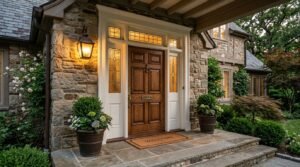
Wooden doors provide an entirely different aesthetic experience. Their natural grain patterns, textures, and craftsmanship create warmth and character that many homeowners find emotionally appealing. Wood introduces a sense of tradition and permanence that glass cannot replicate.
Architectural compatibility plays a major role in decision-making. Ultra-modern residences often benefit from glass doors, while traditional, rustic, farmhouse, colonial, and classic architectural styles typically pair better with wooden alternatives.
Design Flexibility
Glass doors offer remarkable flexibility through tinted, frosted, etched, textured, decorative, and colored glass options. These customizations allow homeowners to balance privacy and aesthetics while creating unique visual statements.
Wooden doors excel in customization through carving, panel construction, staining, painting, molding, and handcrafted detailing. Designers can tailor wooden doors to virtually any design language.
The versatility of both materials means neither option is inherently superior. Instead, the optimal choice depends on the intended architectural outcome and overall interior design strategy.
Durability and Longevity Comparison
Glass Door Durability
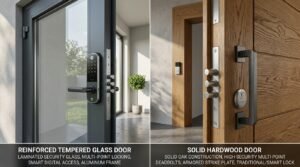
Many people mistakenly assume glass doors are fragile. Modern tempered and laminated glass products are engineered to withstand substantial impacts. Tempered glass is several times stronger than standard glass and shatters into small, less dangerous fragments if broken.
Laminated glass provides additional security through multiple bonded layers. Even if cracked, the glass often remains intact rather than collapsing completely. This technology has significantly improved the long-term durability of modern glass door systems.
Environmental resistance represents another advantage. Glass does not rust, corrode, rot, or suffer termite damage. In humid climates, this characteristic can be particularly valuable.
However, glass remains susceptible to scratching, edge damage, and catastrophic breakage from severe impacts. While rare, replacement costs can be substantial when damage occurs.When evaluating long-term performance, the Glass Door vs Wooden Door comparison often comes down to environmental exposure and maintenance habits.
Wooden Door Durability
Wooden doors can last decades when properly maintained. High-quality hardwood species often remain functional for generations and are commonly found in historic buildings worldwide.
Wood naturally withstands everyday impacts better than glass. Minor dents and scratches can often be repaired through refinishing rather than complete replacement. This repairability contributes significantly to wood’s longevity.
Nevertheless, environmental exposure can create challenges. Excessive moisture, temperature fluctuations, and inadequate maintenance may cause warping, swelling, cracking, or decay over time.
Proper sealing, painting, staining, and routine inspections are essential for maximizing wooden door lifespan, particularly for exterior applications.A detailed Glass Door vs Wooden Door analysis reveals that both materials can last for decades when properly maintained.
Energy Efficiency and Insulation
Thermal Performance of Glass Doors
Energy efficiency has become a major consideration in residential construction. Traditional glass historically performed poorly as an insulator, but technological advancements have transformed modern glass door systems.
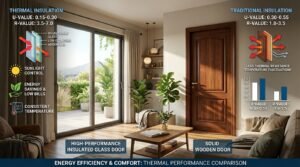
Double-glazed and triple-glazed glass doors significantly reduce heat transfer. Low-E coatings further improve performance by reflecting heat while allowing visible light transmission.
These innovations help maintain indoor temperatures while minimizing heating and cooling demands. However, glass generally remains less insulating than solid wood.
Climate conditions should strongly influence glass door selection. In extreme environments, premium insulated glass becomes particularly important for maintaining efficiency.Energy-conscious homeowners frequently research Glass Door vs Wooden Door options before selecting a new door system.
Thermal Performance of Wooden Doors
Wood naturally acts as an excellent insulator due to its cellular structure. Solid wood doors reduce heat transfer effectively without requiring advanced engineering enhancements.
This insulating capability contributes to lower energy consumption and improved comfort throughout the year. Homes in colder climates often benefit substantially from wood’s thermal properties.
Wood also reduces drafts and helps maintain consistent indoor temperatures. This performance advantage can translate into meaningful utility savings over time.
For homeowners prioritizing energy efficiency, solid wood often holds a slight advantage, particularly when comparing standard door configurations.The Glass Door vs Wooden Door comparison becomes especially important in regions with extreme weather conditions.

Privacy and Security Considerations
Privacy Benefits and Challenges
Privacy represents one of the most significant differences in the Glass Door vs Wooden Door comparison. Standard clear glass offers limited privacy, making it unsuitable for many applications without modifications.
Frosted, textured, tinted, and smart glass technologies address privacy concerns while preserving light transmission. These solutions provide flexibility but often increase costs.
Wooden doors naturally provide complete visual privacy. This characteristic makes them ideal for bedrooms, bathrooms, offices, and entryways where privacy remains a primary concern.
For many homeowners, privacy requirements become the deciding factor when choosing between these materials.
Security Performance
Security concerns frequently arise when discussing glass doors. While modern laminated and tempered glass improves resistance, determined intruders may still view glass as a potential vulnerability.
Advanced security glass systems, reinforced frames, multipoint locking mechanisms, and impact-resistant products significantly improve protection levels.
Wooden doors generally provide strong physical barriers, especially when constructed from solid hardwood and paired with quality hardware. Their opaque nature also prevents outsiders from seeing interior spaces.
Ultimately, security performance depends heavily on construction quality, hardware selection, and installation standards rather than material alone.Security concerns are a major factor when homeowners compare Glass Door vs Wooden Door solutions.
Maintenance Requirements
Maintaining Glass Doors
Glass doors require regular cleaning to maintain visual clarity and aesthetic appeal. Fingerprints, dust, water spots, and smudges become highly visible on glass surfaces.
Fortunately, glass does not require painting, staining, sealing, or refinishing. Maintenance typically involves cleaning products and occasional hardware inspections.
In coastal or dusty environments, cleaning frequency may increase substantially. Large glass surfaces can become labor-intensive to maintain in pristine condition.
Despite cleaning requirements, glass generally demands less specialized maintenance than wood over its lifespan.
Maintaining Wooden Doors
Wooden doors require ongoing maintenance to preserve appearance and structural integrity. Paint, stain, varnish, or protective coatings must be periodically renewed.
Regular inspections help identify moisture damage, insect activity, cracking, or finish deterioration before major issues develop. Preventative maintenance significantly extends service life.
Environmental exposure influences maintenance frequency. Exterior wooden doors typically require more attention than interior installations.
While maintenance demands are higher, many homeowners appreciate the ability to restore and refinish wood rather than replace it entirely.

Cost Analysis: Glass Door vs Wooden Door
Initial Investment
Glass door pricing varies dramatically based on size, glass type, framing systems, and customization requirements. Premium frameless systems and insulated glass units often command substantial upfront investments.
Wooden door pricing also varies according to species, craftsmanship, construction quality, and customization. Solid hardwood doors typically cost more than engineered alternatives.
Budget-conscious buyers may find entry-level wooden doors more affordable, while luxury projects often see comparable pricing across both categories.Budget planning should always include a complete Glass Door vs Wooden Door cost assessment.
Long-Term Ownership Costs
Long-term costs extend beyond initial purchase prices. Maintenance, repairs, energy consumption, and replacement considerations influence total ownership expenses.
Glass doors often require less routine maintenance but may incur higher replacement costs if damaged. Wooden doors require ongoing care but frequently allow cost-effective repairs.
A comprehensive financial analysis should consider expected lifespan, environmental conditions, and maintenance commitments rather than focusing solely on purchase price.A proper Glass Door vs Wooden Door comparison considers installation, maintenance, and replacement expenses.
Environmental Sustainability
Sustainability of Glass Doors
Modern glass manufacturing increasingly incorporates recycled materials and energy-efficient production processes. Glass is recyclable and can contribute to sustainable building certifications.
Natural light enhancement also reduces electricity consumption, supporting broader sustainability objectives. However, glass manufacturing remains energy-intensive compared to some alternative materials.
Environmental performance depends heavily on product quality, thermal efficiency, and lifecycle management.
Sustainability of Wooden Doors
Responsibly sourced wood represents one of the most renewable building materials available. Sustainable forestry practices support long-term environmental stewardship.
Wood stores carbon throughout its lifespan and generally requires less manufacturing energy than many synthetic materials. This contributes positively to environmental impact assessments.
Certification programs help consumers identify sustainably harvested wood products, ensuring responsible sourcing practices.
Advanced Case Study & Real-World Application
Consider two homeowners undertaking major renovation projects. The first owns a modern urban residence featuring open-concept architecture, expansive views, and abundant natural surroundings. Their primary objectives include maximizing daylight, creating visual openness, and establishing a contemporary design language.
In this scenario, glass doors become the logical choice. Large sliding glass systems connect interior and exterior spaces seamlessly while enhancing natural illumination. Energy-efficient glazing technologies mitigate thermal concerns, and privacy solutions address visibility issues where necessary.This real-world example demonstrates how the Glass Door vs Wooden Door decision varies according to homeowner priorities.
The second homeowner owns a traditional family residence emphasizing comfort, privacy, and timeless design. Their priorities include acoustic control, thermal efficiency, security, and classic architectural aesthetics.
For this project, wooden doors provide superior alignment with design and functional goals. Solid hardwood entry doors enhance curb appeal while delivering excellent insulation and privacy. Interior wooden doors support noise reduction and maintain design consistency throughout the home.Architects often approach the Glass Door vs Wooden Door debate differently depending on project goals and design requirements.
Commercial applications reveal similar patterns. Corporate offices often favor glass doors to encourage transparency, collaboration, and openness. Luxury hotels may combine both materials strategically, utilizing glass in public spaces and wood in private guest areas.
These examples demonstrate that successful door selection depends less on determining a universal winner and more on matching material characteristics to project objectives. The most effective solutions often integrate both materials where they perform best.
Frequently Asked Questions
Is a glass door stronger than a wooden door?
Modern tempered and laminated glass doors are significantly stronger than many people realize. Engineered safety glass can withstand substantial impact forces while maintaining structural integrity. However, strength should be evaluated according to specific performance criteria.
Wood excels in resisting everyday physical abuse such as bumps, scratches, and minor impacts. Glass performs well under designed load conditions but remains vulnerable to severe concentrated impacts.
The better choice depends on anticipated usage conditions and environmental factors. Premium products in either category provide excellent durability when properly installed and maintained.
Which is better for energy efficiency: glass or wood?
Wood generally offers superior natural insulation due to its cellular structure and lower thermal conductivity. Solid wood doors effectively reduce heat transfer without requiring specialized technology.
Glass doors have improved dramatically through double glazing, triple glazing, inert gas fills, and Low-E coatings. High-performance glass systems can achieve impressive efficiency levels.
For most standard residential applications, solid wood retains a slight advantage. However, premium insulated glass doors can deliver highly competitive performance while providing additional daylight benefits.
Are glass doors safe for main entrances?
Yes, modern glass doors can be extremely safe when manufactured using laminated or tempered safety glass. Security performance improves further through reinforced frames, impact-resistant glass, and advanced locking systems.
Many contemporary luxury homes successfully utilize glass entry doors without compromising security. Product specification and installation quality play crucial roles in overall performance.
Homeowners concerned about security should prioritize certified impact-resistant products and professional installation services.
Which door type requires less maintenance?
Glass doors generally require less structural maintenance because they do not warp, rot, crack, or suffer insect damage. Most maintenance involves cleaning surfaces and inspecting hardware components.
Wooden doors require periodic refinishing, painting, sealing, and environmental monitoring. These maintenance tasks preserve appearance and structural integrity over time.
While glass often demands less maintenance overall, cleaning frequency may increase depending on environmental conditions and visibility expectations.
Do glass doors increase property value?
Glass doors can enhance property value when aligned with architectural style and market expectations. Modern buyers frequently appreciate natural light, open spaces, and contemporary aesthetics.
High-quality glass installations contribute to premium visual appeal and may improve perceived property sophistication. However, value impact varies by location, property type, and buyer preferences.
The greatest value gains occur when glass doors complement broader design strategies rather than appearing as isolated upgrades.
Are wooden doors becoming outdated?
Wooden doors remain among the most popular door choices worldwide. Their timeless appearance, versatility, and performance characteristics continue attracting homeowners across diverse architectural styles.
While contemporary design trends have increased glass door popularity, wood maintains strong relevance in both traditional and modern construction projects.
Manufacturers continuously innovate with engineered wood products, improved finishes, and advanced construction techniques that keep wooden doors highly competitive.
Which door is better for interior spaces?
The answer depends on functional requirements. Glass doors excel in offices, dining rooms, living areas, and spaces where light transmission is desirable. They enhance openness and improve visual connectivity.
Wooden doors perform exceptionally well in bedrooms, bathrooms, home offices, and other privacy-sensitive areas. They also provide superior acoustic separation.
Many successful interior designs strategically combine both materials to optimize functionality throughout the home.
Can glass and wood be combined in one door?
Absolutely. Hybrid doors represent one of the fastest-growing design categories. These products combine wooden frames with decorative or functional glass panels.
The approach allows homeowners to enjoy the warmth and strength of wood while benefiting from natural light transmission. Hybrid solutions often provide an ideal balance between aesthetics, privacy, and performance.
This combination frequently delivers the best of both worlds for residential and commercial applications.
Conclusion & Roadmap Forward
Ultimately, the Glass Door vs Wooden Door choice depends on balancing aesthetics, privacy, durability, and budget.The Glass Door vs Wooden Door debate does not produce a universal winner because each material excels under different circumstances. Glass doors offer exceptional natural light, modern aesthetics, spatial openness, and contemporary appeal. Wooden doors provide superior privacy, traditional beauty, strong insulation, and enduring craftsmanship.Homeowners who carefully evaluate Glass Door vs Wooden Door factors are more likely to achieve long-term satisfaction.
The most effective decision begins with identifying your priorities. If maximizing daylight, creating visual openness, and achieving a modern architectural statement are primary goals, glass doors often represent the superior choice. If privacy, thermal efficiency, classic aesthetics, and long-term repairability matter most, wooden doors frequently deliver greater value.
Budget considerations should extend beyond purchase price to include maintenance requirements, energy performance, expected lifespan, and potential repair costs. Environmental conditions, security expectations, and architectural compatibility should also influence final decisions.The Glass Door vs Wooden Door comparison shows that neither option is universally better, only better suited for specific situations.
In many high-performing residential and commercial projects, the optimal solution involves strategically combining both materials. Glass can enhance public and shared spaces, while wood provides privacy and insulation where needed.By understanding every aspect of Glass Door vs Wooden Door, you can confidently choose the ideal solution for your property.
By evaluating durability, aesthetics, security, maintenance, sustainability, and long-term ownership costs through the framework presented in this guide, you can confidently select the door solution that aligns with your property’s functional requirements and design vision. The best choice is not simply the most popular option—it is the one that supports your specific goals for years to come.