
Modern architecture and interior design are undergoing a remarkable transformation driven by innovations that combine aesthetics, functionality, energy efficiency, and user experience. One of the most revolutionary developments in this field is Smart Glass Technology, an advanced glazing solution capable of changing its transparency on demand. Traditional glass has always served as a barrier that allows light to enter while maintaining visibility, but it lacks adaptability. As buildings become smarter and businesses seek greater control over privacy, energy consumption, and occupant comfort, switchable glass has emerged as a game-changing solution.
The growing demand for intelligent buildings has accelerated the adoption of Smart Glass Technology across commercial offices, healthcare facilities, luxury homes, hotels, retail environments, and transportation sectors. Unlike conventional blinds, curtains, or privacy films, smart glass can instantly switch from transparent to opaque using electrical current or specialized material reactions. This capability allows users to control privacy levels while maintaining a sleek, modern appearance.
Understanding how smart glass works requires examining the advanced materials, electrical systems, and scientific principles that make dynamic transparency possible. While the concept may appear futuristic, the technology has matured significantly over the last decade, making it increasingly accessible for mainstream architectural applications. From reducing solar heat gain to enhancing security and creating multifunctional spaces, smart glass delivers benefits that extend far beyond privacy.
This comprehensive guide explores every aspect of Smart Glass Technology, including its operating principles, various technological approaches, manufacturing methods, advantages, limitations, installation requirements, maintenance considerations, and future innovations. Whether you are an architect, property owner, facility manager, designer, or technology enthusiast, this guide provides an authoritative understanding of how switchable glass is reshaping the built environment.
Understanding Smart Glass Technology
What Is Smart Glass Technology?
Smart Glass Technology refers to advanced glazing systems capable of altering their light transmission properties in response to electrical current, heat, light, or other environmental stimuli. Unlike standard glass that maintains a fixed transparency level, smart glass dynamically changes its appearance and performance characteristics based on user preferences or automated controls.
The technology relies on specialized materials embedded between glass layers. These materials react to electrical signals or environmental conditions by reorganizing their molecular structure. As this structural change occurs, the glass transitions between transparent, translucent, tinted, or opaque states. The result is a highly adaptable surface that can serve multiple functions throughout the day.
In commercial environments, switchable glass frequently replaces traditional partitions and conference room walls. Organizations increasingly value flexible workspaces that support both collaboration and privacy. Smart glass enables these objectives without sacrificing natural daylight or architectural openness.
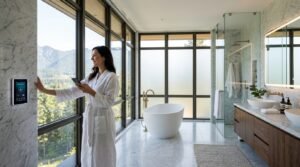
Residential adoption is also expanding rapidly. Homeowners are using smart windows in bathrooms, bedrooms, skylights, and exterior facades to achieve privacy, energy efficiency, and modern aesthetics. As manufacturing costs continue to decrease, intelligent glass systems are becoming more accessible across various market segments.
Evolution of Smart Window Technology
The concept of dynamically adjustable glass dates back several decades. Early research focused primarily on electrochromic materials capable of changing tint levels under electrical stimulation. Initial products were expensive, slow to respond, and limited in practical applications.
Advancements in material science significantly accelerated development. Researchers discovered new compounds and polymer structures capable of faster switching times, greater durability, and improved optical clarity. These innovations enabled broader commercialization and expanded application possibilities.
During the early 2000s, improvements in manufacturing techniques made smart glass more reliable and scalable. Architectural firms began incorporating the technology into landmark projects where innovation, sustainability, and user experience were key priorities.
Today, smart glass represents a mature industry supported by sophisticated manufacturing processes, intelligent building integration, and ongoing research. Modern systems offer superior performance, longer life cycles, and greater customization than earlier generations.

The Science Behind How Smart Glass Works
Fundamental Principles of Switchable Glass
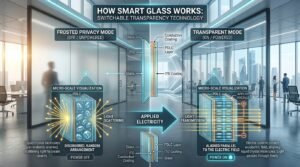
Understanding how smart glass works begins with the interaction between light and matter. Light travels through transparent materials when their internal molecular structures allow photons to pass without significant scattering. Smart glass manipulates this process by changing molecular alignment.
In most switchable glass technologies, microscopic particles, liquid crystals, or electrochromic compounds alter their arrangement when stimulated. This rearrangement affects how light travels through the material, thereby changing transparency levels.
When particles align uniformly, light passes through efficiently, producing a transparent appearance. When particles become randomly distributed, incoming light scatters, creating an opaque or frosted effect. This transition can occur within seconds depending on the technology employed.
The ability to control molecular organization electronically forms the foundation of modern smart glass systems. Sophisticated control circuits regulate voltage levels, ensuring consistent and predictable performance.
The Role of Electricity in Smart Glass
Electricity serves as the primary activation mechanism for many forms of switchable glass. Low-voltage electrical current flows through conductive layers embedded within the glass assembly.
These conductive layers distribute electrical energy evenly across the surface. Uniform energy distribution ensures consistent optical changes throughout the entire panel rather than localized switching effects.
The electrical requirements are surprisingly modest. Most systems operate using low-voltage power supplies, making them safe for residential and commercial installations. Energy consumption remains relatively low compared to many conventional building systems.
Modern smart glass can also integrate with building automation systems. Occupancy sensors, daylight sensors, mobile applications, and centralized management platforms enable dynamic control based on user preferences and environmental conditions.

Types of Smart Glass Technology
PDLC Smart Glass Technology
How PDLC Smart Glass Works
Polymer Dispersed Liquid Crystal (PDLC) technology is among the most widely adopted forms of Smart Glass Technology. PDLC consists of microscopic liquid crystal droplets suspended within a polymer matrix sandwiched between conductive layers.
When electrical power is removed, liquid crystal molecules assume random orientations. This randomness scatters light and produces an opaque or frosted appearance. Privacy is immediately achieved without requiring curtains or blinds.
When voltage is applied, the liquid crystals align uniformly. This alignment allows light to pass directly through the material, making the glass transparent. The transition typically occurs within milliseconds to seconds.
PDLC technology is particularly popular for interior applications because of its fast switching speed, privacy functionality, and sleek appearance.
Advantages of PDLC Smart Glass
PDLC systems provide instant privacy control. Users can switch transparency levels with a simple wall switch, remote control, or automation system.
Architects appreciate PDLC solutions because they preserve minimalist design aesthetics. Eliminating blinds and curtains creates cleaner visual lines and more contemporary spaces.
Healthcare facilities benefit significantly from PDLC installations. Patient rooms, operating theaters, and consultation areas require both privacy and visibility under varying circumstances.
The technology also supports projection applications. In opaque mode, PDLC glass can function as a rear projection screen, adding versatility to conference rooms and commercial environments.
Electrochromic Glass Technology
How Electrochromic Glass Works
Electrochromic glass operates differently from PDLC systems. Rather than creating privacy through light scattering, electrochromic technology adjusts tint levels.
The glass contains specialized electrochromic materials that undergo reversible chemical changes when electrical current is applied. These chemical reactions alter light absorption characteristics.
As the reaction progresses, the glass gradually darkens, reducing solar heat gain and glare. Reversing the electrical current restores transparency. Unlike PDLC, electrochromic glass often remains in its current state without continuous power.
This characteristic makes electrochromic systems particularly attractive for exterior building envelopes where energy efficiency is a primary objective.
Benefits of Electrochromic Smart Glass
Electrochromic glass significantly reduces cooling loads in commercial buildings. By limiting solar heat gain, HVAC systems operate more efficiently.
Occupant comfort improves through better glare control. Excessive sunlight can create visual discomfort and reduce productivity, particularly in office environments.
Building owners frequently use electrochromic glazing to support sustainability initiatives. Reduced energy consumption contributes to green building certifications and operational cost savings.
The technology also preserves outdoor views while managing sunlight, offering advantages over conventional shading solutions.

SPD Smart Glass Technology
Suspended Particle Device Operation
Suspended Particle Device (SPD) technology utilizes microscopic particles suspended within a liquid medium. These particles react to electrical current by changing orientation.
Without power, particles scatter and absorb light, producing a dark appearance. When voltage is applied, particles align, allowing light transmission.
SPD systems provide highly precise control over light levels. Users can select varying degrees of tint rather than switching solely between transparent and opaque states.
The technology is commonly found in luxury vehicles, yachts, aircraft windows, and premium architectural applications where variable shading is desired.
Commercial Applications of SPD Glass
Luxury transportation industries have embraced SPD technology due to its ability to control sunlight without mechanical shades.
Aircraft manufacturers use SPD windows to improve passenger comfort while reducing maintenance associated with traditional window coverings.
High-end residential projects increasingly incorporate SPD skylights and large window installations to maximize natural light control.
Architectural designers value SPD’s aesthetic versatility and advanced performance capabilities.
Manufacturing Process of Smart Glass
Material Selection and Engineering
The production of Smart Glass Technology begins with careful material selection. Manufacturers must balance optical clarity, durability, conductivity, and environmental resistance.
Glass substrates undergo rigorous quality testing before entering production. Even minor imperfections can affect final performance and visual consistency.
Conductive coatings play a crucial role in system operation. Transparent conductive materials distribute electrical current while maintaining visibility.
Advanced polymers, liquid crystals, and electrochromic compounds are formulated according to precise specifications to ensure reliable long-term operation.
Lamination and Assembly
Smart glass components are assembled through sophisticated lamination processes. Multiple layers are bonded under controlled temperature and pressure conditions.
Proper lamination ensures structural integrity, optical performance, and environmental protection. The embedded smart layer must remain stable throughout decades of use.
Quality control procedures verify electrical functionality, switching consistency, and visual appearance before products leave the manufacturing facility.
Manufacturers also conduct accelerated aging tests to evaluate long-term performance under varying environmental conditions.
Benefits of Smart Glass Technology
Enhanced Privacy Without Compromise
One of the primary advantages of Smart Glass Technology is instant privacy control. Traditional privacy solutions often block natural light and disrupt design aesthetics.
Switchable glass allows users to transform spaces dynamically without sacrificing openness or daylight access. This flexibility is particularly valuable in modern office environments.
Healthcare facilities benefit from improved patient privacy while maintaining efficient monitoring capabilities. Medical staff can adjust visibility based on operational requirements.
Hotels, luxury residences, and executive offices also leverage smart glass to create premium experiences that combine comfort, privacy, and sophistication.
Energy Efficiency and Sustainability
Energy efficiency represents another major driver behind smart glass adoption. Buildings account for significant global energy consumption, much of which relates to heating, cooling, and lighting.
Electrochromic and SPD technologies help regulate solar heat gain, reducing HVAC loads and lowering energy costs. Dynamic control enables buildings to respond intelligently to changing environmental conditions.
Improved daylight management decreases reliance on artificial lighting. Occupants enjoy more comfortable spaces while organizations reduce operational expenses.
These benefits align closely with sustainability initiatives and green building standards worldwide.
Modern Aesthetics and Design Freedom
Architects increasingly prioritize clean, minimalist aesthetics. Smart glass eliminates the need for bulky blinds, curtains, and mechanical shading systems.
The result is greater design flexibility and uninterrupted architectural expression. Interior spaces appear larger, brighter, and more technologically advanced.
Corporate environments benefit from enhanced branding opportunities. Transparent meeting rooms promote openness while maintaining the ability to switch to private mode when necessary.
Luxury residential projects similarly utilize smart glass to create seamless indoor-outdoor experiences.

Installation and Integration Considerations
Electrical Infrastructure Requirements
Successful implementation requires proper electrical planning. Power supplies, control systems, and wiring must be integrated during the design phase.
Most PDLC systems require continuous power to maintain transparency. Designers must account for operational energy requirements and backup strategies.
Building automation integration can significantly enhance functionality. Smart controls enable automated switching based on occupancy, scheduling, or environmental conditions.
Professional installation ensures compliance with safety standards and optimal performance.
Maintenance and Longevity
Modern smart glass systems are designed for long service life. However, maintenance practices influence long-term reliability and performance.
Routine cleaning procedures resemble those used for conventional glass. Harsh chemicals should generally be avoided to protect coatings and interlayers.
Electrical components require periodic inspection to verify proper operation. Preventive maintenance programs can identify issues before they affect performance.
Manufacturers continue improving durability through advanced materials and engineering techniques.
Advanced Case Studies and Real-World Applications
Corporate Headquarters Transformation
A multinational corporation sought to modernize its headquarters while improving space utilization and employee experience. Traditional conference rooms relied on blinds and opaque partitions that created visual clutter and maintenance challenges.
The organization implemented Smart Glass Technology throughout executive offices, meeting rooms, and collaborative spaces. Employees gained immediate control over privacy settings, allowing rooms to adapt dynamically to different activities.
The result was a more flexible workplace environment. Natural daylight penetrated deeper into the building, reducing reliance on artificial lighting. Employee satisfaction improved due to enhanced comfort and modern aesthetics.
Operational efficiency also increased. Facilities managers integrated the smart glass system into the building management platform, enabling centralized control and automated scheduling. The project demonstrated how switchable glass can support both design and business objectives.
Healthcare Facility Innovation
A leading hospital incorporated PDLC Smart Glass into patient rooms, surgical suites, and consultation areas. Privacy requirements in healthcare environments are complex and frequently changing.
Traditional curtains created infection-control concerns and required regular maintenance. Smart glass provided a cleaner, more hygienic alternative while maintaining flexibility.
Medical staff could instantly adjust transparency levels during examinations, treatments, and patient consultations. Improved workflow efficiency contributed to enhanced patient experiences.
The installation also supported architectural goals by maximizing daylight exposure, which has been linked to positive health outcomes and occupant well-being.
Frequently Asked Questions
Is Smart Glass Technology energy efficient?
Yes. Smart Glass Technology can significantly improve building energy performance depending on the specific technology employed. Electrochromic systems are particularly effective because they dynamically manage solar heat gain and glare throughout the day.
When sunlight intensity increases, electrochromic glass darkens to reduce thermal loads. This reduces demand on air conditioning systems and lowers energy consumption. During cooler periods, transparency can be increased to maximize daylight and passive solar benefits.
The overall energy impact depends on climate conditions, building orientation, occupancy patterns, and control strategies. Many projects achieve measurable reductions in operational costs after installation.
Building owners often combine smart glass with automation systems to optimize performance further and support sustainability objectives.
How long does switchable glass last?
Most commercial-grade switchable glass systems are designed for long-term performance. Depending on technology type, manufacturing quality, and environmental conditions, service life often exceeds 10–20 years.
Manufacturers conduct extensive testing to evaluate switching cycles, UV resistance, moisture protection, and thermal stability. High-quality products maintain performance across hundreds of thousands or even millions of switching events.
Proper installation plays a crucial role in longevity. Electrical connections, sealing methods, and environmental protection measures influence long-term reliability.
Routine maintenance and adherence to manufacturer guidelines help maximize system lifespan.
Does smart glass provide complete privacy?
PDLC smart glass provides excellent privacy by scattering light and obscuring visual details. While shapes and movement may occasionally be detectable under certain lighting conditions, detailed visibility is effectively eliminated.
Privacy performance depends on glass thickness, installation quality, ambient lighting conditions, and viewing angles. Most commercial systems meet stringent privacy requirements for offices, healthcare facilities, and residential applications.
Additional privacy measures can be incorporated when necessary. Specialized interlayers, coatings, and glazing configurations further enhance privacy performance.
Users should evaluate application-specific requirements during project planning to ensure optimal results.
Can smart glass be installed in existing buildings?
Yes. Retrofitting existing buildings is one of the fastest-growing segments of the smart glass industry. Many solutions can replace conventional glazing with minimal structural modifications.
Retrofit projects require evaluation of electrical infrastructure, framing systems, and environmental conditions. Existing windows, partitions, and doors may need adjustments to accommodate new components.
Professional assessment helps identify potential challenges before installation begins. Careful planning minimizes disruptions and ensures successful integration.
Retrofitting offers building owners a practical pathway to modernization without requiring extensive renovations.
What is the difference between PDLC and electrochromic glass?
PDLC and electrochromic technologies serve different purposes. PDLC primarily provides privacy through light scattering, switching between transparent and opaque states.
Electrochromic glass focuses on solar control by adjusting tint levels. Instead of becoming opaque, it gradually darkens while preserving visibility through the glass.
PDLC is commonly used for interior partitions, conference rooms, healthcare facilities, and privacy-focused applications. Electrochromic systems are frequently installed in exterior facades and windows.
Selection depends on project objectives, privacy requirements, energy goals, and architectural considerations.
Is Smart Glass Technology suitable for residential homes?
Absolutely. Residential adoption continues growing as homeowners seek innovative solutions for privacy, energy efficiency, and aesthetics.
Bathrooms, bedrooms, skylights, home offices, and exterior windows represent common residential applications. Smart glass eliminates the need for curtains and blinds while enhancing architectural appeal.
Home automation integration allows users to control glass settings through mobile devices, voice assistants, or scheduled routines. This convenience aligns with broader smart home trends.
Although initial costs remain higher than conventional glazing, many homeowners view smart glass as a premium investment that enhances property value and user experience.
Conclusion and Roadmap Forward
Smart Glass Technology represents one of the most significant advancements in modern architectural glazing. By enabling dynamic control over transparency, privacy, daylight, and solar heat gain, switchable glass addresses challenges that traditional glazing solutions cannot solve effectively. As buildings become smarter and more sustainability-focused, intelligent glass systems are increasingly moving from luxury features to mainstream design elements.
Understanding how smart glass works reveals the remarkable combination of material science, electrical engineering, and architectural innovation behind these systems. Technologies such as PDLC, SPD, and electrochromic glass each offer distinct advantages suited to different applications. Whether the goal is privacy, energy efficiency, glare reduction, or aesthetic enhancement, there is a smart glass solution capable of meeting those requirements.
Looking ahead, continued advancements in nanotechnology, artificial intelligence, and building automation will further expand the capabilities of switchable glass. Faster response times, lower costs, improved durability, and enhanced energy performance are expected to accelerate adoption across commercial, residential, healthcare, transportation, and hospitality sectors.
For architects, developers, facility managers, and property owners seeking future-ready solutions, investing in Smart Glass Technology is not simply about adopting a new material. It is about embracing a smarter, more adaptive, and more sustainable built environment that aligns with the evolving demands of modern living and working spaces.